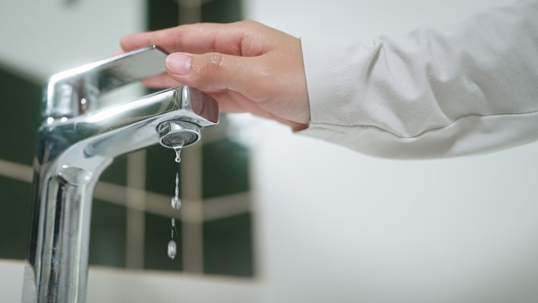
When your shower suddenly loses its strength, the kitchen sink only trickles, and every faucet in the house seems weaker than usual, it usually points to a bigger plumbing issue than a clogged fixture. Low water pressure throughout your home can make everyday tasks frustrating, from washing dishes to doing laundry, and it's often a sign that something within your plumbing system needs attention.
Unlike a single slow faucet, whole-house low water pressure typically affects your home's main water supply or plumbing infrastructure. In Central Texas, hard water, aging plumbing systems, and shifting soil conditions can all contribute to this problem. Understanding the possible causes can help you determine whether it's something simple to check yourself or a repair that calls for a licensed plumber.
Start by Determining Whether the Problem Affects the Whole House
Before assuming the worst, take a few minutes to see where the problem is occurring.
If only one sink or shower has weak water pressure, the issue is usually isolated to that fixture. Mineral buildup inside a faucet aerator or showerhead is a common culprit, especially in areas with hard water.
If every faucet, shower, and outdoor spigot has noticeably reduced pressure, the issue is likely somewhere in your home's main plumbing system.
Another helpful clue is whether the problem affects:
- Both hot and cold water
- Only hot water
- Only cold water
If only your hot water has poor pressure, the water heater or its plumbing connections may be restricting flow. When both hot and cold water are affected throughout the house, the source is typically farther upstream.
Common Causes of Low Water Pressure Throughout the House
Several plumbing issues can reduce water pressure across your entire home. Some are relatively easy to identify, while others require specialized equipment to diagnose.
A Partially Closed Main Water Valve
Your home's main shutoff valve controls the amount of water entering the plumbing system.
After plumbing repairs or maintenance, the valve may not have been reopened completely. Even being partially closed can noticeably reduce water flow throughout the house.
Older gate valves can also wear out internally, preventing them from opening fully even when the handle appears to be in the correct position.
A Failing Pressure-Reducing Valve (PRV)
Many homes receive water from the municipal supply at pressures that are too high for residential plumbing. A pressure-reducing valve (PRV) lowers incoming pressure to a safe, consistent level.
Over time, the internal spring and diaphragm inside the valve wear out or become clogged with mineral deposits.
A failing PRV may cause:
- Low pressure throughout the home
- Pressure that fluctuates during the day
- Sudden changes in water flow
Most PRVs last around 10 to 15 years, although water quality can affect their lifespan.
Hidden Water Leaks
Not every plumbing leak leaves obvious puddles.
Leaks inside walls, beneath slabs, or in underground water lines allow water to escape before it reaches your fixtures, reducing pressure throughout the home.
You may also notice:
- Higher-than-normal water bills
- Damp areas around the home
- The sound of running water when no fixtures are in use
According to the U.S. Environmental Protection Agency (EPA), household leaks waste nearly 1 trillion gallons of water nationwide each year, and the average home can lose about 10,000 gallons annually from leaks alone. Even relatively small leaks can affect water pressure over time.
Why Hard Water Causes Water Pressure Problems in Central Texas
Hard water is one of the biggest contributors to plumbing problems across Central Texas.
Water in this region contains high levels of dissolved calcium and magnesium, which gradually form mineral deposits inside plumbing pipes, fixtures, and water heaters.
As scale builds up:
- Pipe openings become smaller.
- Water flow slows down.
- Fixtures clog more easily.
- Water heaters become less efficient.
The U.S. Geological Survey classifies water above 180 milligrams per liter (mg/L) as very hard, and much of Central Texas falls within that category due to its limestone geology.
Older Plumbing Can Restrict Water Flow
Many older homes still contain galvanized steel water lines.
Although these pipes were once common, they gradually corrode from the inside. Rust combines with mineral buildup to reduce the inside diameter of the pipe, leaving less room for water to flow.
This often causes:
- Gradually decreasing water pressure
- Uneven pressure between floors
- Reduced flow whenever multiple fixtures are used
Unlike a sudden plumbing failure, this type of pressure loss usually develops slowly over several years.
When Low Water Pressure Signals a Bigger Plumbing Problem
Weak water pressure isn't always an emergency, but certain warning signs deserve prompt attention.
Watch for combinations such as:
- Low water pressure and rising water bills
- Rust-colored or cloudy water
- Wet spots on floors or in the yard
- Warm areas on slab floors
- Water meter movement when no water is being used
When several of these symptoms appear together, they often indicate a hidden leak, deteriorating pipes, or another issue affecting your home's plumbing system.
Simple Things You Can Check Yourself
Before scheduling a plumbing appointment, there are a few basic checks worth making.
Verify the Main Shutoff Valve
Confirm that the main water valve is fully open.
- Lever-style valves should line up with the pipe.
- Round gate valves should turn completely counterclockwise.
Ask Nearby Neighbors
If neighboring homes are experiencing the same issue, your local water provider may already be repairing a water main or dealing with temporary supply problems.
Test Your Water Pressure
A simple water pressure gauge attaches to an outdoor hose bib and provides a quick reading.
Most residential plumbing systems operate best between 40 and 60 PSI. Pressure consistently below 40 PSI is generally considered low, while sustained pressure above 80 PSI may indicate a faulty pressure-reducing valve and can place unnecessary stress on plumbing fixtures.
When It's Time to Call a Plumber
Some causes of low water pressure cannot be confirmed without professional equipment.
If you suspect:
- A slab leak
- A failing pressure-reducing valve
- Corroded supply pipes
- Underground water line damage
- Extensive mineral buildup
It's best to have the plumbing system inspected before the problem becomes more expensive to repair.
Specialized leak detection equipment, pressure testing, sewer cameras, and plumbing inspections can pinpoint the source without unnecessary digging or guesswork.
Restore Strong Water Pressure With Professional Plumbing Help
Low water pressure throughout your home usually points to a specific plumbing issue, whether it's a worn valve, hidden leak, aging pipes, or mineral buildup from Central Texas's hard water. Finding the root cause early can prevent larger plumbing repairs and help restore normal water flow throughout your home.
If you've ruled out the simple fixes and your water pressure still isn't where it should be, BSR Plumbing can help. Our team provides plumbing inspections, leak detection, pipe repair, water line services, and pressure-reducing valve repairs throughout Central Texas.
Not sure what's causing the problem?
Get the answers you need by calling (254) 452-5490 or booking online.